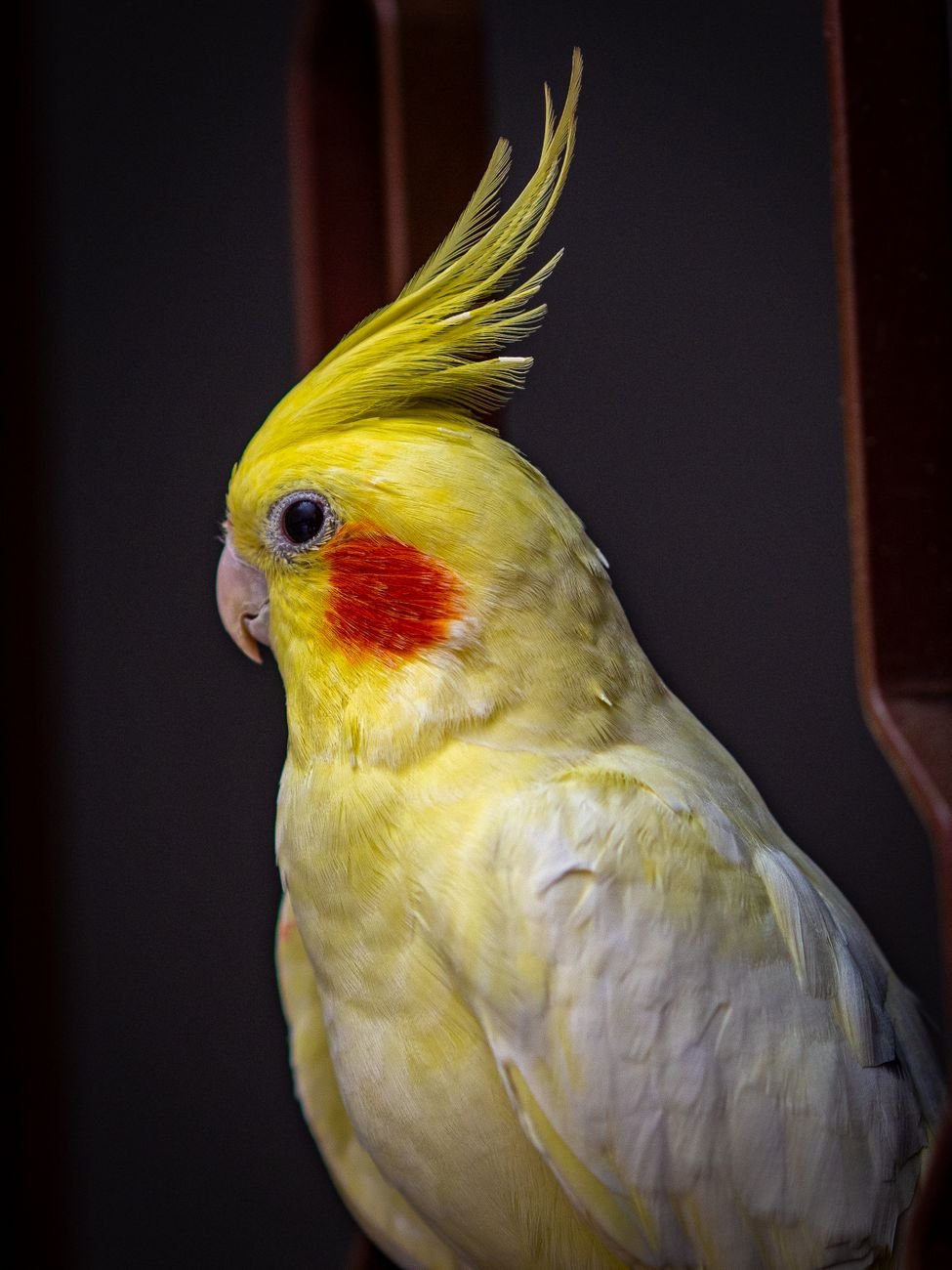
Quick answer: cockatiels hide illness until it’s advanced - a sick-looking bird has usually been unwell for days already. The three checks that catch problems earliest are droppings (count and appearance), posture (puffed, hunched, low on the perch), and appetite. Any change that lasts more than 24 hours deserves an avian vet call; some signs below mean a vet today.
This concealment is instinct, not stubbornness. In a wild flock, the bird that looks weak is the one a predator singles out, so cockatiels are wired to perform wellness for as long as they physically can. It means the burden of noticing falls on you - and it’s why the subtle signs matter more than the obvious ones.
The symptom checker
Find the symptom, see what it usually means and how fast to act. Where there’s a full guide, the symptom links to it.
| Symptom | Most likely meaning | Urgency |
|---|---|---|
| Puffed up for hours, eyes closing | The classic sick bird look - generalised illness | 🚨 Same day |
| Tail bobbing, clicking, open-mouth breathing | Respiratory distress | 🚨 Same day |
| Sitting on the cage floor, can’t perch | Severe weakness, egg binding in hens | 🚨 Same day |
| Straining with no droppings; swollen abdomen | Egg binding - life-threatening in 24-48h | 🚨 Immediately |
| Discharge from eyes, nostrils or beak | Infection (bacterial, viral or fungal) | 🚨 Same day |
| Not eating; sharp drop in droppings count | Emergency in a bird this small | 🚨 Within 24h |
| Abnormal droppings - colour, texture, undigested seed | Digestive, liver or crop problem | ⚠️ Vet in 24-48h |
| Weight loss you can feel at the keel bone | Chronic illness - often the only sign | ⚠️ Vet in days |
| Feather loss, ragged or bleeding feathers | Plucking, parasites, feather disease | ⚠️ Vet in days |
| Sneezing with wet discharge or crusted nostrils | Upper respiratory infection | ⚠️ Vet in days |
| Limping, favouring one foot, drooping wing | Injury, bumblefoot, or gout | ⚠️ Vet in days |
| Quiet, less singing, withdrawn, sleeping more | Earliest general sign - watch closely | ⚠️ Monitor 24h, then call |
| Occasional dry sneeze, brief post-bath fluffing | Normal cockatiel behaviour | ✅ No action |
Pain has its own subtle vocabulary - guarding a body part, flinching on touch, changed perching posture. That’s covered separately in how to tell if a cockatiel is in pain.
Emergency signs: vet today, not tomorrow
- Open-mouth breathing at rest, or breathing you can hear
- Falling off the perch, unbalanced, or unable to grip
- Mucus or semi-digested seed stuck to the face and head feathers (regurgitation from illness, not courtship)
- Bleeding that doesn’t stop within a few minutes, or any lump or swelling
- A hen straining, hunched, with a swollen abdomen
- Dull, sunken or swollen eyes; hunched posture with head tucked while awake
- Seizures, twirling, or a head held twisted
While you arrange the visit: warmth (26-29°C with an escape route), quiet, food and water within easy reach, and keep the cage paper for the vet. Don’t have an avian vet yet? Find one before you need one.
Symptoms by body system
Breathing
Healthy breathing is silent and invisible. Tail bobbing at rest, clicking timed to breaths, wheezing, voice change and wet sneezes all point to respiratory disease - caused by bacteria, viruses, fungal spores from damp bedding, or airborne irritants like non-stick cookware fumes, scented candles and aerosols. Respiratory problems escalate faster in birds than almost any other illness. The full symptom-by-symptom guide: cockatiel breathing problems.
Digestion and droppings
Droppings are the closest thing you have to a daily blood test. A healthy dropping has three parts - coiled green-brown feces, white urates, clear urine - and a healthy bird produces 18-26 a day. Colour changes, undigested seed, true diarrhea or a falling count all warrant attention; vomiting (distinct from courtship regurgitation) and crop problems need a vet. The cockatiel poop chart decodes every variation with urgency ratings.
Feathers and skin
Distinguish moulting (normal, twice-yearly, symmetrical) from trouble: bald patches, ragged or bleeding feathers, abnormal colour, or a bird tearing feathers out. Causes range from nutritional deficiency - overwhelmingly common on seed-only diets - to parasites, stress plucking and viral feather disease. Start with why is my cockatiel losing feathers? and note that itching plus visible irritation suggests mites or lice, which an avian vet treats easily.
Behaviour
Behavioural change is usually the first sign, days before anything physical shows. Less singing, reduced preening, withdrawal from interaction, sleeping through normally active hours, new aggression in a gentle bird - each is worth taking seriously when it persists. The behaviour guide covers what’s normal so you can spot what isn’t.
The illnesses behind the symptoms
| Condition | What to know |
|---|---|
| Malnutrition | The most common underlying problem. Seed-only diets run short on vitamin A and calcium, weakening airways and immunity; excess seed fat drives obesity and fatty liver disease. The fix is dietary - see the food safety list. For confirmed seed addicts, sprouted seeds are often accepted where fresh vegetables are refused. |
| Psittacosis (chlamydia) | Should be ruled out in any sick cockatiel; often shows only as conjunctivitis or sinusitis. Treatable - and it can pass to humans, so a proper diagnosis protects the whole household. |
| Candida (thrush) | Fungal overgrowth of the crop and digestive tract, especially after antibiotics or in young birds. Regurgitation, slow crop, white mouth patches. |
| Polyomavirus | Mainly threatens chicks and young birds; abnormal feathering in survivors. |
| Egg binding & chronic laying | Hens can lay without a mate, and each clutch drains calcium. A stuck egg kills within days - see egg binding in cockatiels. |
| Obesity | Creeps in on seed diets and short flight time; leads to fatty liver and arthritis. A weekly weigh-in catches it early - see overweight cockatiel. |
Lutino cockatiel syndrome
Worth knowing if you keep a lutino (the yellow-white, red-eyed mutation). The inbreeding that fixed the colour also carries a genetic package in some lines: a bald patch behind the crest, night thrashing (they fall from the perch more readily in the dark - a night light helps), poorer clotting so bruising and bleeding show at the wing tips, and general clumsiness. None of it is curable, all of it is manageable - softer landings, lower perches, a night light, and an avian vet who knows the bird’s mutation.
Prevention: the habits that catch illness early
- Feed pellets as the base, not seed. Roughly 60% quality pellets, 30% vegetables, 10% seed and treats removes the single biggest cause of cockatiel illness at the source.
- Weigh weekly. A gram scale catches the slow decline feathers hide. More than 5-10% down: call the vet.
- Check droppings daily on plain paper - five seconds while you change the liner.
- Keep the cage dry, clean and ventilated. Damp bedding grows the fungal spores behind aspergillosis; dirty dishes grow everything else. Clean water daily.
- Protect 10-12 hours of dark sleep - chronic tiredness suppresses immunity. See how much sleep do cockatiels need?
- No smoke, aerosols, scented candles or overheated non-stick pans anywhere your bird shares air.
- Annual avian vet check - twice yearly for birds over ten. The baseline weight and bloodwork make any future problem far easier to read.

- NUTRITIONALLY COMPLETE COCKATIEL FOOD: formulated by top avian veterinarians and avian nutritionists
- NON-GMO AND HUMAN-GRADE INGREDIENTS: no artificial colors, flavors, or preservatives
- RICH IN ANTIOXIDANTS & OMEGA 3&6 BALANCED: help support healthy skin, feathers, and immune system
- MADE IN THE USA: our food is mixed, formed, and packaged in small batches and under one roof on the Lafeber family farm in Cornell, IL
- 100% SATISFACTION GUARANTEE: we are a small family company that works hard to produce gourmet pet bird food, which is why we’re confident in offering a 100% satisfaction guarantee
Frequently asked questions
How do I know if my cockatiel is sick?
Run the three-point check: droppings (count and appearance), posture (puffed and hunched vs sleek and alert), appetite. Add breathing you can see or hear, discharge, and reduced singing. One-off oddities happen; anything persisting past 24 hours is a vet call.
What should I do first if my cockatiel seems unwell?
Warmth, quiet, food and water within reach - then call the vet. If you keep several birds, separate the sick one to limit spread. Keep that morning’s cage paper; fresh droppings are the most useful thing you can bring to the appointment.
How often should a healthy cockatiel see a vet?
Annually, moving to every six months past about age ten - plus a first-week check for any new bird before it meets birds you already own. Details in how often should a cockatiel go to the vet?
Can I treat a sick cockatiel at home?
Supportive care at home - warmth, easy food, low stress - buys time, but it doesn’t treat causes, and pet-shop “bird remedies” mostly delay real treatment. With an animal this small, the delay is the dangerous part.
Why do cockatiels hide being sick?
Prey-species instinct: look weak, get targeted. It’s also why “he seemed fine yesterday” is what most owners say at the emergency vet - the bird stopped being able to pretend, not stopped being well.